
Managing Solution Architect, Fujitsu America Inc.
The rapidly evolving automotive sector compels manufacturers to pursue innovative strategies to increase productivity, improve safety, and enhance process flexibility. Human-Robot Collaboration (HRC), which integrates human intuition with robotic precision, represents a significant technological advancement in this context. A recent study published in the American Journal of Technology demonstrates that orchestrating collaborative robot work cells through SAP Digital Manufacturing (SAP DM) can deliver measurable performance improvements on the shop floor.
From Assembly Lines to Collaborative Cells
For decades, traditional automotive assembly lines relied on fixed automation, with heavy machinery performing repetitive, pre-programmed tasks and offering limited flexibility. Although these systems achieved high efficiency, they struggled to accommodate variability and adaptation, often relegating human workers to error-prone manual tasks or supervisory roles with limited engagement.
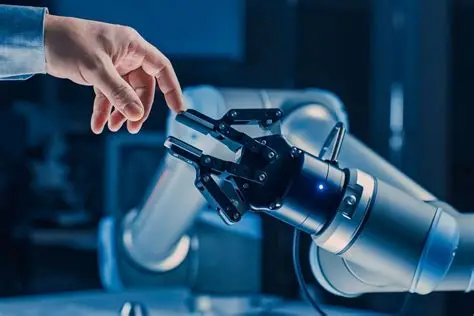
Collaborative robots (cobots) are designed to operate safely alongside humans without requiring caging or physical barriers. Unlike traditional industrial robots, cobots are sensitive to human presence, adaptable to dynamic environments, and easier to program, which enables greater flexibility in mixed work cells.
However, cobots alone are insufficient to achieve optimal results. Manufacturers require a digital orchestration layer that unifies real-time data, sensor systems, human tasks, and enterprise planning tools to fully realize the potential of collaborative automation.
SAP Digital Manufacturing: The Orchestration Backbone
The study by Prahlad Chowdhury, Managing Solution Architect at Fujitsu America, proposes a robust digital framework utilizing SAP Digital Manufacturing (SAP DM) to coordinate human and robot activities within automotive work cells. This approach integrates the following components:
- Real-time shop floor data from sensors and devices,
- Collaborative robot task assignments tuned to human strengths,
- Enterprise resource planning (ERP) data for scheduling and oversight.
The researchers constructed a digital twin, a simulated replica of a cobot work cell, to test the proposed model. They validated this framework through both simulation and real-world experiments, evaluating key performance metrics including task efficiency, safety compliance, throughput, and idle time.
Quantifiable Improvements: Efficiency, Throughput, Safety
The results were not only promising but also quantifiable:
- Task completion times improved by 20–30%, meaning faster work cycles and better utilization of human skills.
- Throughput increased by 10–15%, helping manufacturers meet production targets with fewer delays.
- Idle time decreased significantly, ensuring resources aren’t waiting for decisions or task assignments.
- Safety incident rates dropped by 15–25%, thanks to dynamic tracking and adaptive robot behaviors that anticipate human movement.
The SAP DM-orchestrated HRC model fundamentally shifts traditional automation paradigms by positioning robots as active partners that intelligently balance workloads alongside human operators.
Why Cobots Plus ERP Matters
Cobots are highly effective in precision and repeatability, while humans excel in reasoning, judgment, and adaptability. However, successful implementation depends on coordinated workflows, which is where enterprise software such as SAP DM provides significant value:
- Task Allocation Smartly Distributed: Cobots handle tasks well suited to automation, repetitive, high-precision, or ergonomically taxing, while humans focus on decision-intensive and unstructured work.
- Data-Driven Decision Support: Real-time insights from shop-floor analytics feed ERP systems, reducing bottlenecks and optimizing task sequencing.
- Safety as Standard: Digital orchestration systems continuously monitor human proximity and robot behavior, allowing dynamic adjustments that reduce risk.
This hybrid model closely aligns with Industry 4.0 principles by integrating cyber-physical systems, real-time data, and intelligent automation. It also anticipates Industry 5.0, where humans and machines collaborate in increasingly fluid and adaptive ways.
Implementation Challenges and Opportunities
Despite these significant gains, the study’s authors emphasize that successful adoption is not guaranteed. They identify three key areas requiring targeted investment:
- Coordination Delays: Seamless interoperability between cobots, ERP systems, and human workflows requires careful planning and tuning.
- User Acceptance: Workers must buy into the technology. Trust in cobots and understanding their role is critical for adoption.
- Integration with Legacy Systems: Many automotive facilities still operate with siloed or outdated systems, complicating digital orchestration.
Addressing these factors extends beyond technological solutions and constitutes a change management challenge. Implementing training programs, communication strategies, and incremental pilot deployments can facilitate the transition and help ensure that operators feel empowered rather than displaced.
The Road Ahead: Toward Industry 5.0
The research highlights a broader trend: intelligent manufacturing focuses on augmenting human capacity rather than replacing human workers. Cobots programmed and orchestrated through advanced platforms such as SAP DM can enhance productivity while preserving roles that require human insight.
While the automotive industry continues to invest in automation technologies, HRC frameworks rooted in digital manufacturing platforms offer a more resilient, adaptable, and scalable path forward. As ERP systems evolve and AI-enabled analytics become more sophisticated, these hybrid work cells could become normative across manufacturing sectors.
Conclusion
This American Journal of Technology study provides compelling evidence that human-robot collaboration, when supported by digital orchestration tools like SAP Digital Manufacturing, can be a game-changer for automotive manufacturers. Beyond efficiency and throughput improvements, it sets the stage for safer workplaces, smarter task allocation, and enhanced worker satisfaction.
For operations leaders and technology strategists alike, the message is clear: the future of manufacturing isn’t fully automated, it’s cooperatively automated. Embracing that future will require thoughtful integration of technology, culture, and strategy, but the payoff, as this research shows, can be substantial.