

Major tech companies see a future beyond smartphones and have invested more than $150 billion in augmented reality (AR), artificial intelligence (AI), brain-computer interfaces (BCI), and ambient computing technologies. This huge investment shows their race toward a market that could reach $3 trillion by 2030. These technologies will significantly affect global GDP as they mature.
The shift away from traditional mobile technology comes at a crucial moment. Smartphone sales continue to decline worldwide and no longer offer the breakthrough advances that users once expected each year. The 23% drop in smartphone accessory funding in 2024 shows investors have lost interest in conventional mobile technology. Meta has already put over $50 billion into Reality Labs and now focuses on AR glasses and immersive environments to transform how we interact digitally.
The future might look quite different from today. Recent surveys show 68% of users want technology that leaves their hands free and lets them multitask while keeping their privacy through personal interfaces. Users could see digital information displayed on their surroundings through AR glasses instead of holding screens. Smartphones won’t vanish right away – they’ll just become less central as we move toward living in smart environments that can understand and respond to our needs.
Tech giants invest $150B to replace smartphones by 2030
 Major tech companies now pour vast resources into developing technologies that could replace smartphones. With a collective investment exceeding $150 billion, these corporations bet on a fundamental change in how humans interact with digital information.
Why smartphone innovation has plateaued
The once-booming smartphone market faces major growth barriers. Global smartphone shipments dropped by 4% in 2023, marking the fourth straight year of decline. Smartphones have reached their peak in their current form, which causes this slowdown.
Users feel less motivated to upgrade as new generations offer minimal improvements. Today’s devices already offer sleek displays, great cameras, long battery life, and fast connectivity. This leaves little room for groundbreaking improvements. One industry analysis states, “the impetus for users to upgrade to a new device dropped, due to the consistency of features across devices and price points”.
The industry has settled on a standard design: rectangular slabs with large touchscreens, thin bezels, and camera arrays. This sameness in design has led to buyer fatigue. A 2023 survey shows 58% of people feel new smartphone designs lack excitement and personality.
How market saturation is driving change
Smartphones already reach nearly 90% of the population in mature markets like North America and Western Europe, leaving few growth chances. People now keep their phones for 31 months instead of 24 months in 2016. By 2024, users held their devices for 3.5 years before upgrading—up from 2.5 years in 2018.
These longer cycles threaten revenue growth for companies that depend on hardware sales. Tech giants now create brand new device categories to restart the replacement cycle. Money flows tell the story: funding for smartphone accessories dropped by 23% in 2024, showing investors care less about traditional mobile tech.
The stakes are huge—the post-smartphone marketplace could grow from niche markets into a $3 trillion mega-market by 2030. This massive potential drives huge R&D investments across the industry.
What post-smartphone computing aims to solve
Post-smartphone tech tackles core limitations of current devices. Studies show 68% of users want hands-free tech that enables multitasking and private, personal interfaces. “The real change comes from how digital life will progress once we stop needing to hold it in our hands”.
Future systems want to create an “interface-light world” where people use voice, gestures, and possibly thoughts. One analysis explains, “Instead of launching an app to order a taxi, you say—or think—what you need, and your AI agent handles it. No interface, no friction. Just intent, executed”.
Progress in AI, sensors, and miniaturization will help wearables and implantable devices work better than smartphones. The goal focuses on building an ecosystem where AR glasses, smart rings, AI devices, and other wearables work together live, reducing our reliance on smartphones.
Experts expect AR glasses, AI assistants, and brain-computer interfaces to gain early adoption between 2025-2030. Mainstream use should follow in 2030-2035 as devices become cheaper and more integrated.
Meta, Apple, and Google unveil next-gen AR glasses
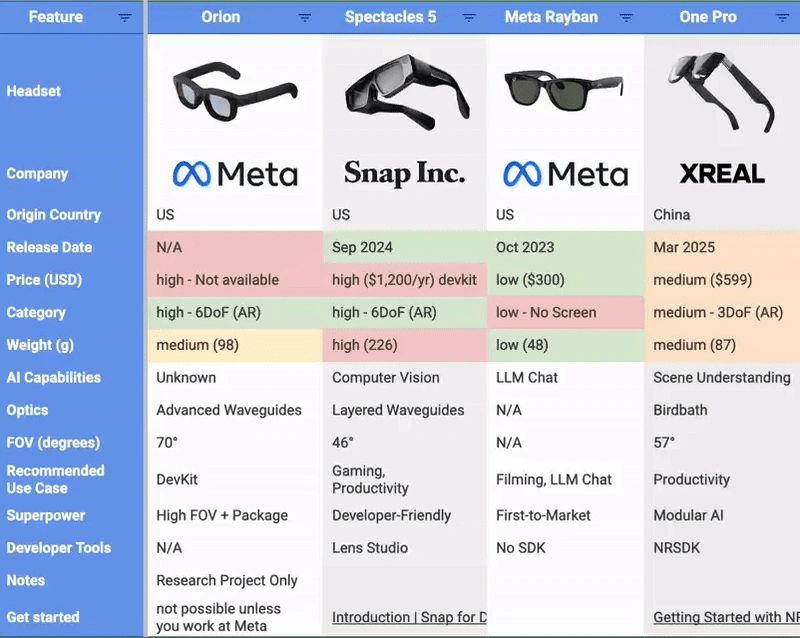 Major tech companies are racing to develop advanced augmented reality (AR) glasses that could replace smartphones in the coming years. The market shows strong promise as sales of AI glasses grew by over 250% in the first half of 2025 compared to the previous year.
Meta’s Hypernova and Ray-Ban smart glasses
Meta leads the smart glasses market through mutually beneficial alliances with luxury eyewear brands. Their Ray-Ban Meta Display glasses combine sophisticated technology with classic Ray-Ban styling. These glasses pack a high-resolution display in the lens. Users can view notifications privately, take photos with a 12MP camera, make video calls, translate text, and navigate—all through voice commands or hand gestures.
The innovative Meta Neural Band works perfectly with these glasses. It lets users control functions through subtle hand movements with electromyography (EMG) sensors that detect muscle signals in the wrist. The glasses run for six hours of mixed use, and the charging case adds 24 more hours. This makes them a practical choice for all-day wearable computing.
Meta plans to release their Hypernova smart glasses with more advanced features at under $800, making AR technology more available to everyone.
Apple’s Vision Pro and rumored Apple Glass
Apple joined the spatial computing market when they launched the Vision Pro headset in the UK in July 2024 at £3,499. Unlike Meta’s approach, the Vision Pro creates immersive experiences by combining digital content naturally with physical space.
Users get 2-2.5 hours of typical use from the device, which extends to 3 hours for video watching. It lets users organize apps spatially and create virtual workspaces, though it works best for stationary rather than mobile use.
Apple seems to be changing direction. Trusted industry analysts say the company will move away from a direct Vision Pro successor. Instead, they’ll focus on lightweight AI glasses planned for late 2026. This change suggests Apple sees great potential in smaller, more wearable devices for the post-smartphone era.
Google’s Project Astra and Android XR
Google has returned to smart glasses with new technologies and partnerships after their earlier Google Glass failed to catch on. They plan to launch AI-powered smart glasses in 2026, building on their new Android XR operating system.
Google works with Samsung, Gentle Monster, and Warby Parker to develop two types of glasses. The first type focuses on screen-free assistance using built-in speakers, microphones, and cameras to interact naturally with Google’s Gemini AI assistant. The second type includes an in-lens display for private viewing.
Project Astra, developed with XREAL, stands out as Google’s most exciting venture. These wearables offer a 70-degree field of view and optical see-through technology that layers digital content over the real world. Google co-founder Sergey Brin calls these glasses “the perfect hardware” for artificial intelligence, noting that the original Google Glass was just “ahead of its time”.
Neuralink and OpenAI push boundaries of human-machine interaction
 While AR glasses make headlines, other paths to screen-free computing are emerging through direct neural connections and ambient AI systems.
Neuralink’s brain-computer interface trials
Elon Musk’s Neuralink reached a historic milestone in January 2024 with its first human brain implant. Noland Arbaugh, who became quadriplegic after a diving accident, showed he could control a computer cursor with his thoughts. The company expanded its trials to more participants throughout 2024-2025. We focused on people with spinal cord injuries and ALS.
The company’s “Telepathy” brain-computer interface turns neural signals into digital actions. Users have gained much independence through the system. They can play online chess, first-person shooters, and create 3D designs using CAD software. A participant named Alex put it simply: “It allows me to be creative”.
OpenAI’s ambient AI and robotics integration
OpenAI takes a different approach to the post-smartphone future by developing an ecosystem that covers both virtual and physical domains. The company chose strategic collaborations in robotics instead of building hardware in-house. They want to extend AI’s use from digital interfaces to physical interactions.
Among other robotics projects, OpenAI has teamed up with designer Jony Ive to create a new kind of device—reportedly a pocket-sized, screenless companion powered by OpenAI’s models. This audio-first device uses voice and ambient interaction instead of traditional displays. CEO Sam Altman describes it as “so beautiful…a case would be a crime”.
How BCIs and AI assistants could replace screens
These approaches offer viable alternatives to traditional smartphones. Neuralink’s technology lets users control computers directly with their thoughts. BCI users can already play games and create digital content using only their thoughts. The technology now focuses on medical applications, but its path suggests wider uses—like in early mobile phones that evolved into today’s smartphones.
OpenAI’s ambient AI vision moves away from screen dependence. Their systems sense, infer, and help based on environmental cues and priorities—without needing constant interaction. AI assistants might hear contextual cues like “next Thursday,” check availability, and suggest meeting times automatically instead of launching apps.
These technologies join together toward a future where digital interaction happens through thought or conversation rather than screens and apps—possibly ending the smartphone’s central role in daily life.
Breakthrough technologies enable screenless ecosystems
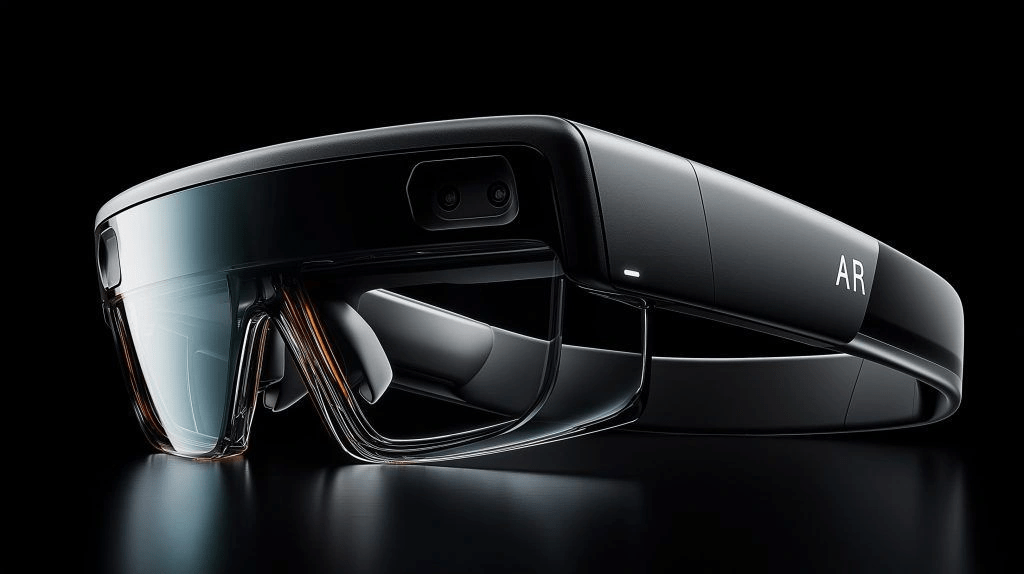 Major technological breakthroughs are paving the way for screenless computing environments. Three key innovations are revolutionizing this field.
Waveguide and holographic display innovations
Recent breakthroughs in waveguide-based holographic displays create lifelike images in ultra-thin devices. Research shows these near-eye displays combine waveguide holography with AI-driven algorithms to produce amazing results. The displays can show three-dimensional scenes that look just like reality while staying as thin as regular glasses.
A breakthrough in synthetic aperture waveguide holography combines compact waveguide architecture with AI calibration. This creates an “eyebox” that’s 100 times larger than older systems. Users can move their eyes naturally and still see clear images.
The combination of inverse-designed full-color metasurface gratings with special waveguide geometry removes the need for bulky projection optics. This makes AR displays look more like regular eyeglasses.
On-device AI and hybrid cloud processing
Hybrid AI architectures are the life-blood of screenless ecosystems. These systems split processing between devices and cloud systems to deliver better experiences while using resources efficiently.
Processing AI on devices offers clear benefits: faster response times, better privacy by keeping personal data on the device, and lower infrastructure costs. Companies can save money by using billions of edge devices instead of building expensive cloud infrastructure.
Today’s hybrid systems choose where to process data based on how sensitive it is, how much computing power it needs, and how fast it must respond.
Next-gen batteries and energy harvesting
These devices need more power than traditional batteries can provide. Multi-source energy harvesting technologies turn environmental energy into electricity, which could make devices self-sufficient.
The best approaches use solar cells that convert 8-30% of light to power, capture heat from temperature differences, and use triboelectric nanogenerators (TENGs) to turn movement into electricity.
These technologies help create devices that work without needing battery changes. This makes large-scale deployment possible where it would be too expensive otherwise.
Privacy, ethics, and adoption challenges slow progress
 Technology keeps advancing, but several roadblocks stand in the way of post-smartphone tech adoption. Users worry about their privacy, ethical issues, and real-world limitations that make it hard to switch from regular devices to newer alternatives.
Consumer concerns over surveillance and data
Privacy stands as the biggest problem in adoption, as data protection worries 50.5% of consumers. Wearables collect sensitive biometric data that poses major risks. Health records are valuable targets – they sell for up to £198.54 each on black markets, while payment cards go for just £4.29. About 97% of users click “accept” on terms and conditions without reading them, even though these policies are lengthy at 6,113 words. These devices gather thousands of data points each day, and users often don’t know about it.
Social resistance to wearables and implants
The debate goes beyond privacy to questions about body autonomy. People are uneasy about tech that tracks their activity, sleep patterns, and physical movements. Some worry about changes in personality and identity conflicts. Some countries have taken action – Germany banned smartwatches for kids that could be used as hidden listening devices. It also turns out that 21.3% of potential users just don’t see why they need wearable tech.
Battery life, cost, and integration hurdles
Real-world problems also slow down adoption. Today’s devices don’t last long – immersive headsets run for only 2-2.5 hours. Innovative technology costs too much for many people, with 15.7% saying they can’t afford it. Users also struggle with integration, especially when they’re stuck in one company’s ecosystem, which limits how they can move and manage their data.
Conclusion
The race toward post-smartphone technology undoubtedly represents one of the most significant shifts in consumer technology since the introduction of smartphones themselves. As global smartphone sales continue to slow, tech giants have collectively invested over $150 billion in creating alternatives that address fundamental limitations of our current devices. Whether through AR glasses, brain-computer interfaces, or ambient AI systems, these companies envision a future where digital interaction happens seamlessly without constantly holding a screen.
Nevertheless, several hurdles remain before these technologies can truly replace smartphones. Privacy concerns persist as primary obstacles, with most consumers citing data protection as their main worry. Additionally, practical limitations like battery life, high costs, and integration issues present significant challenges that manufacturers must overcome.
Therefore, rather than an overnight revolution, we will likely witness a gradual evolution. Smartphones might initially transform into hub devices that connect various wearables before eventually fading into the background of our digital lives. Though the timeline remains uncertain, the direction appears clear – we are moving toward more natural, intuitive ways of accessing digital information.
Regardless of which technologies ultimately prevail, this transition signals a fundamental shift in how humans interact with technology. Instead of adapting our behaviors to fit device limitations, future systems will adapt to us – understanding our needs, responding to our natural movements, and integrating seamlessly into our daily lives. The post-smartphone era promises not just different devices but a fundamentally different relationship with technology itself.
FAQs
1. What will replace smartphones by 2030?
By 2030, a combination of augmented reality (AR) glasses, brain-computer interfaces, and ambient AI systems are expected to gradually replace many smartphone functions. Tech giants are investing heavily in these technologies to create more intuitive and seamless ways of accessing digital information.
2. How are companies preparing for the post-smartphone era?
Major tech companies like Meta, Apple, and Google are developing advanced AR glasses and investing in technologies such as brain-computer interfaces and ambient AI. They’re focusing on creating hands-free, more natural ways of interacting with digital content that could eventually reduce reliance on traditional smartphones.
3. What are the main challenges in adopting post-smartphone technologies?
The primary challenges include privacy concerns related to data collection, social resistance to wearable and implantable technologies, and practical issues such as limited battery life and high costs. Additionally, there are ethical considerations surrounding body autonomy and potential personality changes.
4. How long will smartphones remain relevant?
While the transition to post-smartphone technologies is underway, smartphones are likely to remain relevant for several years. They may evolve into hub devices connecting various wearables before gradually becoming less central to our digital lives. The shift is expected to be gradual rather than an overnight change.
5. What benefits do post-smartphone technologies offer over traditional devices?
Post-smartphone technologies aim to provide more natural and intuitive ways of accessing digital information. They offer hands-free operation, allow for concurrent tasks, and can integrate more seamlessly into our daily lives. These technologies have the potential to create an “interface-light world” where digital interaction happens through voice, gesture, or even thought.