

A mere 5% increase in customer retention rates can boost profits by 25% to 95%. This powerful statistic shows why client relationship partners have become vital for businesses seeking sustainable growth. Companies now spend up to five times more on acquiring new customers than keeping existing ones. This reality has pushed organizations to focus on building relationships rather than constant prospecting.
Client relationship partners act as strategic links between companies and their key clients. Their role covers managing fee income and ensuring profitability. They also expand service offerings, capture client spend, and keep satisfaction levels high. Most companies look for candidates with over 10 years of experience. The compensation matches these high requirements, with salaries that are much higher than industry averages. This piece gets into the client relationship partner job description and what makes them successful. You’ll also find applicable strategies to excel in this key role as we approach 2025.
What is a Client Relationship Partner (CRP)?
A Client Relationship Partner (CRP) builds strategic connections between an organization and its most valuable clients. The role reaches way beyond the reach and influence of traditional customer service. CRPs create meaningful relationships and become trusted advisors who help clients meet their business goals. They don’t just answer client questions – they understand their client’s business, industry challenges, and long-term goals inside out.
The rise of the CRP role
The CRP role has changed a lot over the last several years. Client-facing roles used to focus on personal metrics like billable hours. The modern CRP now takes charge of broader business outcomes, including:
- Total fee income from clients
- Profitability of client work
- Range of services provided
- Share of client’s spending
- Client satisfaction across services
This change shows how organizations have fundamentally changed their approach to customer relationships in today’s competitive market. Companies realized keeping existing customers costs much less than finding new ones, which made the CRP position more strategic. CRPs now act as the main contact for an organization’s most important accounts. They make sure these top clients get exceptional service and attention.
The largest professional service firms have seen the CRP role grow more sophisticated, especially when you have clients with complex international needs. These professionals coordinate resources between departments, take part in strategic discussions, and plan long-term with clients. Organizations now arrange their pay systems with CRP goals, tying individual compensation to client-specific targets.
Why CRPs are more than account managers
CRPs and account managers both work with clients, but CRPs operate at a much higher level. Here’s what makes them different:
Strategic focus: CRPs build long-term strategic partnerships and spot business opportunities. Account managers handle day-to-day operations. CRPs think ahead and spot client needs early, while account managers react to immediate issues.
Compensation differences: The strategic nature of CRP work shows in their pay. Client partners earn approximately £108,399 on average, compared to account managers at £55,352.
Required skill sets: CRPs need advanced expertise in portfolio management (11%), cloud technologies (10%), and CRM systems (8%). Account managers focus on customer service (13%), account management (8%), and client service (4%) skills.
Scope of responsibility: CRPs manage multiple accounts or valuable client portfolios and often lead teams of account managers. They work directly with senior executives at client organizations. Their job includes making sure the client’s voice gets heard internally while representing the firm externally.
CRPs want to change how partners work with colleagues to deliver integrated services that meet client needs. Account managers keep accounts running smoothly, but CRPs work across departments to solve big-picture challenges before they appear. They bring “the best of the firm to the client and the whole of the client to the firm”.
Key Responsibilities of a CRP in 2025
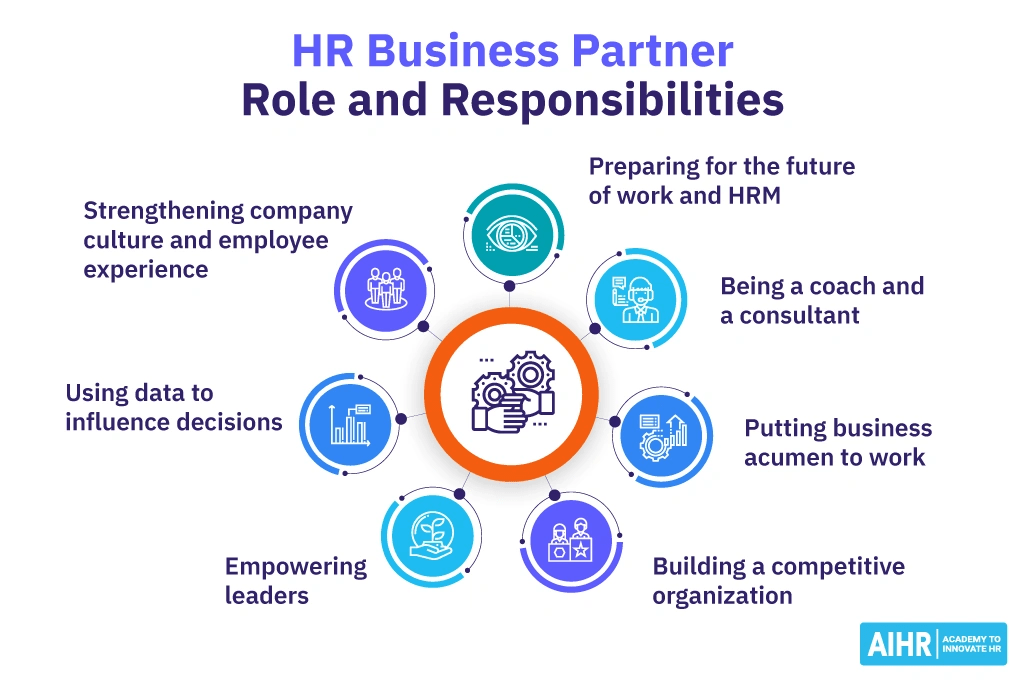
Image Source: AIHR
The business world of 2025 has transformed how Client Relationship Partners (CRPs) work. Their role goes beyond managing accounts. Companies need to grow while watching their resources. CRPs must guide complex client relationships and show real business results. Success in client relationship management depends on four crucial areas.
Strategic relationship development
The best CRPs build deep connections with many stakeholders in client organizations. They don’t rely on just one contact. They create strong bonds with decision-makers, including C-suite executives, and adjust how they communicate based on seniority. Building relationships takes regular contact through different channels. This creates trust and shows commitment to clients.
These partnerships need constant investment to succeed. CRPs must put resources into training and development. They need technology to improve operations and time for team building. When both sides recognize each other’s expertise and celebrate wins together, relationships become strong enough to handle market changes and competition.
Proactive problem-solving
Modern CRPs stand out by solving problems before they happen instead of just reacting. They spot potential issues early and fix them fast, showing clients they matter. This approach starts with a deep understanding of client goals. CRPs watch usage patterns to predict what clients need.
Good CRPs set clear communication schedules. Clients know what to expect and can plan these meetings into their day. Time management becomes crucial here. CRPs who can’t prioritize often end up just reacting to problems instead of preventing them.
Studies show that repeat customers generate 65% of company revenue. Moreover, 57% of customers spend more on brands they trust. These numbers show why proactive service has become essential for CRPs in 2025.
Client advocacy and internal alignment
CRPs champion their clients within the organization. They bring together sales, pre-sales, and delivery teams to focus on making clients happy. They state the client’s vision to internal teams and explain what clients want to achieve. They also share helpful background about the client’s view.
Teams work together when CRPs merge functions across departments like patient relations and risk management. This ensures quick responses to client concerns. CRPs help different departments work together better. They coordinate between sales, customer support, and product development teams.
This support creates clear, strong messages. Staff members use these messages when talking to important stakeholders, including government, donors, and community groups.
Revenue and growth accountability
Modern CRPs carry major financial responsibilities. They drive business growth by expanding existing client relationships. They find opportunities to sell more products or services that truly help their clients’ businesses.
Client Relationship Partners must deliver:
- Overall level of fee income from the client
- Profitability of client work
- Number of different services provided
- Share of client’s total spend captured
- Client satisfaction across all service areas
Today’s CRPs balance company growth goals with client needs. They replace low-margin work with services that have high impact and better margins. This approach to revenue helps firms become trusted advisors instead of just service providers. This is a big deal as it means that they can offer more value to their best clients.
Strong client relationships bring huge financial benefits. CRPs who deliver great service and value turn clients into advocates. These satisfied clients become an extension of the sales team through referrals and positive word-of-mouth.
Essential Skills for CRP Success
The competitive landscape of 2025 just needs a specialized skill set for client relationship partners (CRPs) who want to excel. Successful CRPs must develop a diverse toolkit that makes shared connections possible while improving business results. This toolkit covers four significant skill areas that set exceptional client partners apart from good ones.
Emotional intelligence and empathy
Emotional intelligence (EI) creates the foundation for effective client partnerships. A client relationship partner with high EQ can recognize, understand, and respond to clients’ emotions and concerns before they express them. This knowledge helps CRPs to:
- Build trust and rapport through genuine understanding
- Improve communication by reading between the lines
- Boost problem-solving by staying calm under pressure
- Encourage loyalty by making clients feel heard and valued
Research shows 75% of Fortune 500 companies now employ emotional intelligence training tools. This highlights how essential this skill has become for client-facing professionals.
Business acumen and strategic thinking
Business acumen combines three essential elements that give client relationship partners a complete view of value creation and sustainable growth. These include financial literacy, strategic market thinking, and understanding interconnected business functions. A 2022 LinkedIn Learning survey showed leadership and business acumen among the top three skills employers wanted for management and executive roles. Over 53% of respondents cited these skills.
Client relationship partners need industry-specific knowledge to speak their clients’ language and understand unique challenges. This leads to meaningful conversations and tailored solutions.
Communication and negotiation
Advanced communication skills help client partners express complex ideas clearly, listen actively, and provide constructive feedback. Studies show many organizations report communication skills as their biggest talent gap. About 42% point to business acumen as their primary skills shortage.
Negotiation skills prove vital as client partners discuss terms, prices, and strategies. Effective negotiators find solutions that benefit everyone by balancing honesty with flexibility when addressing client requests.
Tech-savviness and CRM fluency
Digital proficiency has become crucial as client relationship partners must exploit technology to boost client participation. CRPs who understand and employ customer relationship management (CRM) systems gain important advantages through:
- Automating routine tasks
- Accessing predictive analytics
- Creating tailored client experiences
Modern client relationship partners must know how to interpret data for strategic insights. They identify risks, spot growth opportunities, and measure delivered value.
These four skill areas work together. They help CRPs deliver exceptional value while building trust-based relationships that propel business development.
The Roadmap to Becoming a Trusted Client Partner
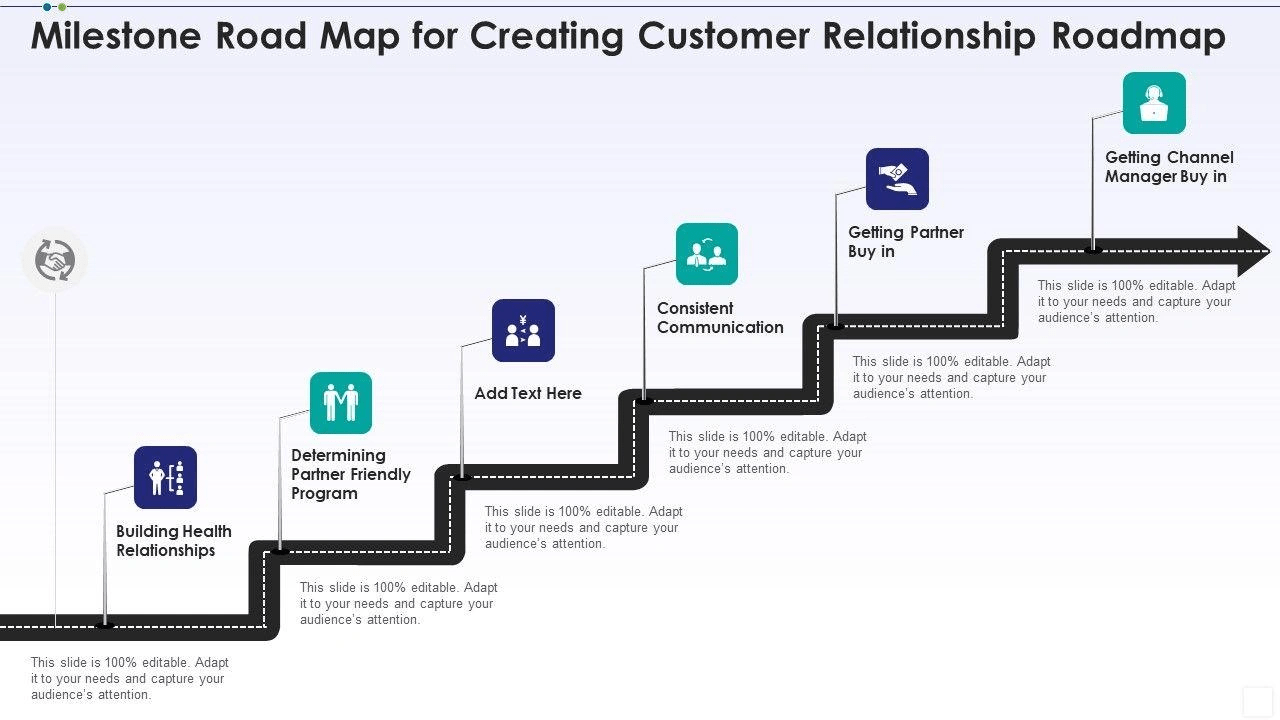
Image Source: SlideGeeks
A trusted client relationship partner needs more than technical knowledge—you need a systematic way to build and nurture meaningful connections. Here’s a five-step roadmap that gives client partners a practical framework to develop lasting partnerships.
Step 1: Understand the client’s business deeply
Great client relationship partners dive deep into their clients’ world. They go beyond basic knowledge to grasp the business structure, challenges, and strategic direction. Take time to visit client facilities or attend their events outside billable hours. Research shows clients love talking about their operations and future plans. Reading industry publications and staying current with trends creates a shared language that transforms the relationship from “me/you” to “we”.
Step 2: Build trust through transparency
Trust forms the foundation of every strong business relationship. Client partners should be transparent about deliverables, follow through consistently, and communicate proactively. Your integrity shines through when you’re upfront about possible challenges. Studies reveal that 65% of people initially distrust the financial industry, which makes transparency even more vital. The best way to handle mistakes is to address them right away—clients trust their advisors more after seeing them own up to errors honestly.
Step 3: Deliver consistent and measurable value
The best client partners give more value than what contracts require. This could include:
- Sharing relevant industry insights
- Making valuable introductions to contacts
- Offering strategic guidance that lines up with business goals
You become a problem-solver instead of just a service provider, showing your dedication to the client’s success. The numbers speak for themselves—repeat customers spend up to 70% more than new ones, highlighting the financial benefits of value-driven relationships.
Step 4: Promote loyalty and retention
Client retention doesn’t happen by accident. Keep in touch after projects end and add personal touches by noting important details about clients’ priorities. Share in celebrations—from partnership milestones to completed projects. Research shows milestone recognition triggers the brain’s reward system, which strengthens emotional bonds. Loyal customers develop emotional connections that make competitor offers less appealing.
Step 5: Use feedback to improve continuously
A structured feedback system shows your commitment to getting better. Gather feedback from all channels—call centers, emails, social media—to get comprehensive insights. Look for patterns in this data to spot trends, group issues, and create action plans. Let clients know about changes you make based on their input. This approach not only makes your service better but builds trust—clients feel valued and understood when they see their opinions matter.
How to Measure CRP Performance and ROI
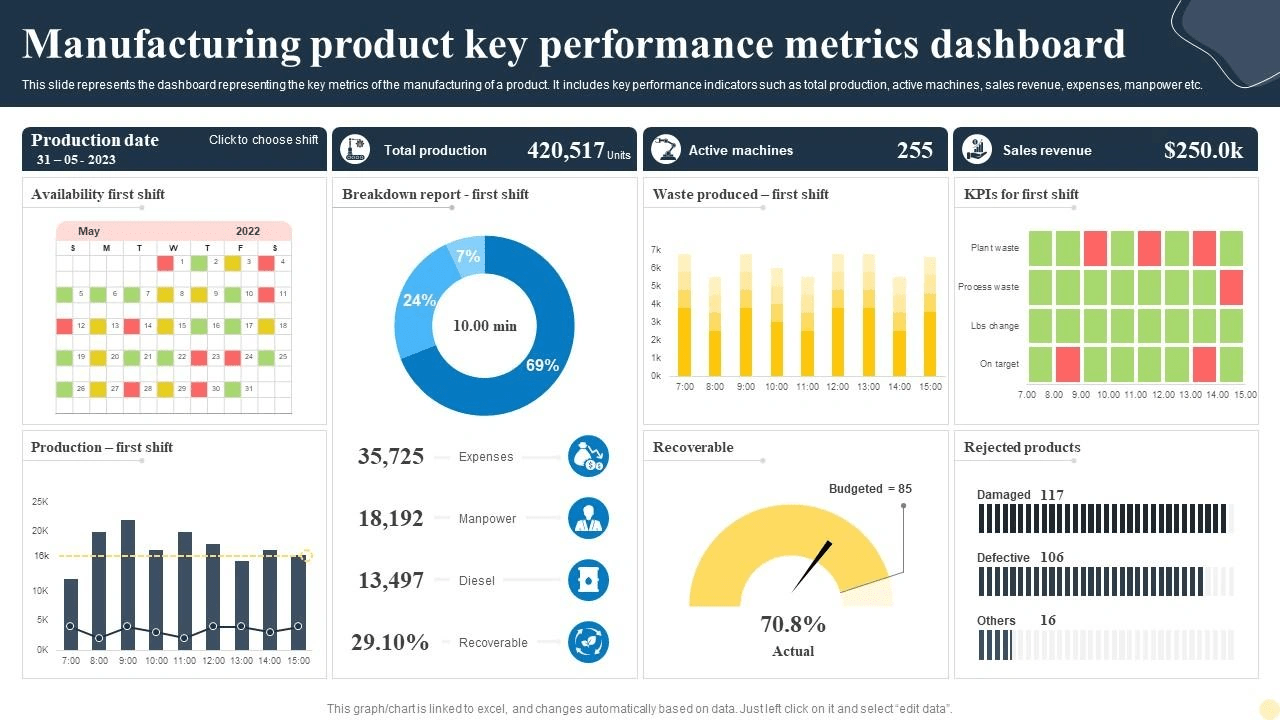
Image Source: SlideTeam
A client relationship partner’s effectiveness needs concrete metrics that show both financial results and relationship quality. Companies investing in CRP roles need to track these vital indicators to prove their value and show real returns on investment.
Client retention and satisfaction metrics
Customer Retention Rate (CRR) helps evaluate CRP performance by showing what percentage of customers stay with the company. SaaS companies aim for a monthly retention rate of 95%, which means a 5% churn rate. The Customer Satisfaction Score (CSAT) measures client satisfaction through simple 5-point scales or yes/no options with happy/sad faces. Yes/no CSAT questions typically score 90% or higher, and lower scores might signal serious problems that need quick fixes.
Account growth and upsell success
Client partners prove their worth through measurable account growth. Expansion Monthly Recurring Revenue (MRR) shows extra recurring revenue from existing clients through upsells and cross-sells. Rising Expansion MRR shows clients see more value and invest more heavily. Customer Lifetime Value (CLV) reveals how much revenue each client relationship could generate long-term. The upsell rate shows what percentage of current customers upgrade their plans or buy extra features – a crucial sign of client relationship partner success.
Net Promoter Score (NPS)
NPS measures customer loyalty by asking: “How likely are you to recommend this product/company to a friend or colleague?” on a 0-10 scale. The score ranges from -100 to +100, calculated by subtracting the percentage of detractors from promoters. Fred Reichheld, who created NPS, says scores above 60 show excellent results. Client relationship partners use NPS with open-ended feedback questions to spot areas they can improve.
Referral generation and client advocacy
Client Referral Rate (CRR) shows how often existing clients bring in new business. The calculation is simple: (New Clients via Referrals / Total New Clients) × 100. A company getting 50 new clients through referrals out of 200 total new clients would have a 25% referral rate. Referral Revenue tracks money earned from referred customers, directly showing how well client partners perform. Well-designed client advocacy programs can boost these numbers through tailored interactions, online communities, and smart referral incentives.
Conclusion
Client relationship partners will play a crucial role in business growth and customer loyalty by 2025. Data shows that companies focusing on building relationships rather than constant prospecting achieve higher profits. CRPs deliver exceptional value and build lasting connections through strategic relationship development, proactive problem-solving, internal advocacy, and revenue accountability.
The best client partners combine emotional intelligence, business knowledge, strong communication, and tech skills effectively. They understand their clients’ needs deeply and build trust through open communication. Their approach helps deliver consistent value, promotes loyalty, and leads to continuous improvements based on feedback.
Companies need concrete metrics to measure how well their CRPs perform. Client retention rates, account growth numbers, Net Promoter Scores, and new referrals show the strength of relationships and their effect on finances. These measurements help companies invest in CRP roles wisely and spot areas that need work.
Business relationships have changed radically from traditional account management to strategic partnerships. CRPs now take charge of broader business results, including total fee income, profits, service range, market share, and client satisfaction at every point of contact.
Client relationship partners bridge the gap between organizations and their most valuable clients. They know how to build deep, meaningful connections while serving as trusted advisors in today’s competitive world. Companies that focus on developing strong client partnerships will see substantial returns through better customer loyalty, more referrals, and steady business growth well beyond 2025.
FAQs
1. What are the key responsibilities of a Client Relationship Partner (CRP) in 2025?
A Client Relationship Partner in 2025 is responsible for strategic relationship development, proactive problem-solving, client advocacy and internal alignment, and revenue and growth accountability. They focus on cultivating deep connections with clients, anticipating and addressing issues, championing client needs within their organization, and driving business growth through existing relationships.
2. How does a Client Relationship Partner differ from an account manager?
While both roles work with clients, CRPs operate at a more strategic level. They focus on long-term collaborations, engage proactively with clients, and typically manage multiple valuable accounts. CRPs also have broader responsibilities, including revenue growth, profitability, and client satisfaction across all service areas. Their compensation is generally higher, reflecting their strategic importance to the organization.
3. What skills are essential for success as a Client Relationship Partner?
Successful CRPs need a combination of emotional intelligence, business acumen, communication skills, and technological proficiency. Emotional intelligence helps in building strong relationships, while business acumen enables strategic thinking. Advanced communication and negotiation skills are crucial for conveying complex ideas and finding mutually beneficial solutions. Tech-savviness, particularly with CRM systems, is increasingly important for enhancing client engagement and deriving data-driven insights.
4. How can a Client Relationship Partner build trust with clients?
Building trust involves understanding the client’s business deeply, maintaining transparency in all interactions, consistently delivering value beyond contractual agreements, and using client feedback for continuous improvement. CRPs should invest time in learning about their clients’ industries, be proactive in communication, address issues promptly, and demonstrate a genuine commitment to the client’s success.
5. What metrics are used to measure the performance of a Client Relationship Partner?
Key performance indicators for CRPs include client retention rates, customer satisfaction scores, account growth and upsell success, Net Promoter Score (NPS), and referral generation. These metrics help evaluate both the financial impact of the CRP’s efforts and the strength of the client relationships they manage. Tracking these indicators ensures accountability and demonstrates the return on investment in CRP roles.