
OpenFuture.world remains the world’s biggest source of open banking progress and innovation information, even though its parent company officially dissolved in October 2024. The London-based platform started in 2013 and has tracked and analyzed fintech developments. It gave an explanation about the faster changing digital world.
Open banking systems now operate in more than 50 countries worldwide. The UK’s Open Banking initiative and the European Union’s PSD2 (Second Payment Services Directive) are prime examples. On top of that, OpenFuture world acts as a complete resource hub that brings professionals together and shares industry news. It expresses new trends in open finance. The open future forum brings innovators together to learn about how open-world technologies alter the map of financial services by offering more consumer choices and market competition.
This piece will get into what OpenFuture.world is, how it drives digital innovation, and why the financial technology community still values its resources after its organizing company’s formal dissolution.
What is OpenFuture.World?
OpenFuture.World is now the leading global hub for open banking and open finance breakthroughs. The platform started as a way to make information available in this fast-moving sector. It brings together bright minds and promising ideas from this emerging industry as a complete knowledge center.
A global hub for open banking and finance
OpenFuture.World serves as the top source of information about open banking, open finance, and the open future landscape. Users can get insights, trend analysis, directory listings, events, and funding opportunities through a freemium model. The industry’s only dedicated search engine gives access to all these resources.
The platform launched its directory in 2020 to solve a key industry need – users needed an easy way to search for pioneers in this space. Co-founder Nick Cabrera explained, “We were regularly being asked if we could recommend companies doing X in region X. With the growth of the industry it was difficult for even big players to identify potential partners”.
The directory now lists over 5,000 organizations, including both regulated and unregulated entities. A partnership with GLEIF has helped merge Legal Entity Identifiers into the system, making it better.
How it connects people, ideas, and innovation
OpenFuture.World works more like an ecosystem than just an information hub. The platform helps people work together and speeds up breakthroughs across financial services. Its complete resources let professionals:
- Find and connect with peers and prospects through its directory and events
- Get carefully selected content that shows progressive work and thinking
- Follow the latest updates on LinkedIn and Twitter channels
- Take part in community discussions through the Open Future Forum
The platform focuses solely on open banking and finance, unlike general fintech news sites that cover everything from cryptocurrency to insurance technology. This focus helps OpenFuture.World spot regulatory changes, technical standard updates, and new use cases that other publications might miss.
Major institutions like Mastercard, UK Finance, and the Financial Conduct Authority often reference OpenFuture.World in their communications. The platform has earned their trust.
Open banking is growing into open finance and now covers loans, mortgages, and insurance. OpenFuture.World keeps up with these changes. The platform tracks developments across more than 60 countries and stays relevant whatever direction open data principles take.
The platform’s API marketplace gives users one place to find, integrate, and monetize APIs. It works both as a knowledge base and a driver for practical implementation in the changing financial ecosystem.
Understanding the Open Future Ecosystem
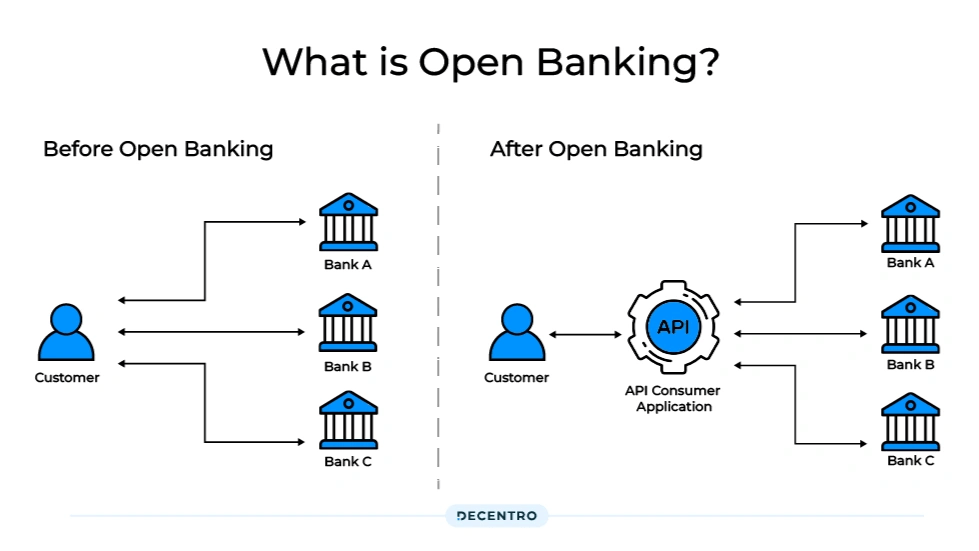
Image Source: LinkedIn
The digital financial world revolves around four interconnected pillars that create a cohesive ecosystem. This framework reshapes how financial services operate. Traditional closed systems are giving way to open digital environments where collaboration matters more than competition.
Open banking: the foundation
Open banking is the life-blood of the open future ecosystem. It lets consumers share their financial data securely with authorized third parties through standardized APIs. This ground-breaking approach gives you control over who can access your banking information. The traditional banking models kept exclusive access to customer information. Now, open banking enables secure data sharing with trusted apps and platforms.
The foundation has gained strong momentum worldwide. Open banking systems exist in more than 50 countries. The United Kingdom’s Open Banking initiative, launched in 2018, serves over 12 million users. It processed 223.9 million payments in 2024. The European Union’s PSD2 (Second Payment Services Directive) requires banks across member states to provide API access, though technical standards vary.
Open finance: expanding the scope
Open finance shows the natural development of open banking principles. Open banking focuses on payment accounts and transactions. Open finance broadens these data-sharing capabilities across the entire financial spectrum. This wider application covers savings, investments, pensions, insurance, and other financial products beyond traditional banking.
The practical applications show its power to reshape the scene. To cite an instance, see retirement planning tools that combine pensions, accounts, investments, and property values for integrated assessments. Insurance underwriting can exploit actual spending patterns instead of credit scores. Wealth management platforms provide unified portfolio views across banks, brokerages, and cryptocurrency exchanges.
Regulatory bodies are learning about frameworks for this expansion. The UK’s Financial Conduct Authority created an Advisory Group on open finance. Australia’s Consumer Data Right framework goes beyond banking to energy and telecommunications.
Embedded finance: integration in action
Embedded finance takes the open ecosystem concept further. It integrates financial services directly into non-financial platforms. This approach brings financial solutions where and at the time they’re needed. Customers no longer need to deal separately with financial institutions. Early examples show seamless payment functionality and point-of-sale credit offerings within apps and online platforms.
Multiple stakeholders benefit from this approach. Businesses create new revenue streams and keep more customers by offering financial services as added value within existing customer trips. Consumers face less friction with services directly within their digital experiences with particular brands or platforms.
PwC notes, “The embedded finance model is closely associated with e-commerce companies and also, increasingly, with large tech firms”. All the same, adoption grows across retail, telecommunications, real estate, hospitality, and automotive sectors.
Data portability and mobility explained
Data portability forms the core of this ecosystem. It lets you get and reuse your personal data across different services without affecting its usability. This principle helps consumers move their information easily between providers. It encourages competition and state-of-the-art solutions.
Data mobility builds on this concept. It emphasizes immediate access within trusted governance frameworks. Both principles help realize the full potential of open banking and finance initiatives. They ensure consumer’s ownership of their information while enabling innovative services built upon that data.
These concepts play a vital role in financial inclusion. Alternative data assessment through transaction histories and other behavioral patterns can help extend credit access. This benefits underserved populations with limited traditional credit histories.
Tools and Resources Offered by OpenFuture.World
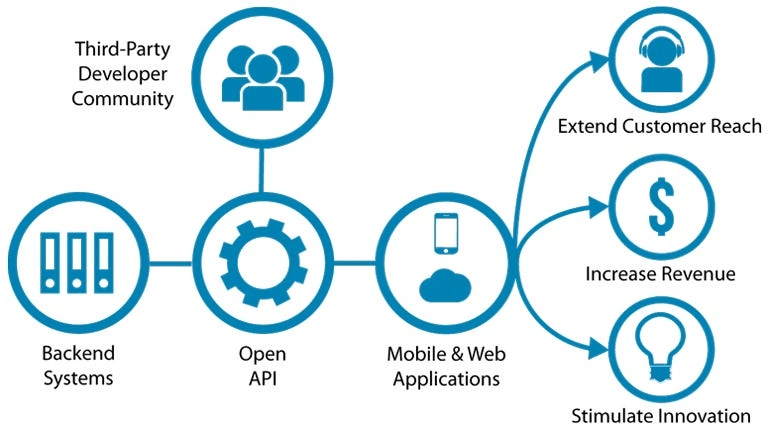
Image Source: FinTech Futures
OpenFuture.World gives professionals powerful tools and resources to guide them through the complex open banking world. The platform helps practitioners stay informed and build meaningful connections within the ecosystem through free access to complete information.
Global directory of innovators
The searchable global directory serves as the life-blood of OpenFuture.World’s offerings. It catalogs over 5,000 organizations in the open banking and open finance ecosystem. The directory launched in 2020 to address a specific industry need. It provides an available resource to find specialized service providers in different regions. Both regulated and non-regulated entities can list their services without charge.
“When I’m talking with people in the open finance community, the most common question I’m asked is whether I can recommend a company offering a certain service in a particular region,” explained co-founder Marie Walker. The directory highlights open banking capabilities and shows which markets companies operate in, what services they provide, and their regulatory status.
Curated news and articles
OpenFuture.World filters through industry noise to highlight developments that matter. Daily curated news and analysis focus on strategic announcements rather than generic press releases. This targeted approach helps professionals identify regulatory changes, major partnerships, and technological advances that could affect their operations.
Original analysis adds to the news aggregation with articles that take a closer look at emerging trends and the technology development. These pieces often include insights from regulatory officials, bank executives, and fintech founders that aren’t available elsewhere.
Event listings and webinars
OpenFuture.World acts as a central hub for industry gatherings. Professionals can find relevant conferences, workshops, and networking opportunities. The platform lists upcoming events across multiple months and locations. These range from regional summits like the Canadian Open Banking Forum to global gatherings such as Money20/20.
Open Future Forum and community engagement
The Open Future Forum brings together a network of innovators, visionaries, investors, entrepreneurs, and technologists. This community offers elite knowledge-sharing, Q&A opportunities, and various initiatives to promote collaboration. The forum organizes influential events, from AI mixers to startup pitch competitions that energize the broader ecosystem.
A member notes, “Open Future Forum’s networking events play a pivotal role in promoting and refining ideas. It is only through collaboration that we can develop the strong global infrastructures for the future”. This commitment to community building matches the open ethos that defines the entire sector.
How OpenFuture.World Drives Innovation

Image Source: TechCrunch
Openfuture.world does more than just share information. The platform shapes the future of open banking and finance through several key initiatives that foster innovation.
Startup pitch competitions
Startup competitions are the life-blood of openfuture.world’s innovation strategy. The platform launched a notable startup competition to discover new business models in open banking and finance. Six finalists receive free tickets to the Open Banking World Congress. These entrepreneurs present their ideas to a panel of industry experts, VCs, and investors.
Companies must meet specific requirements to enter these competitions. They should work in open finance, be less than 3 years old, and have raised under 3 million in investment. Winners get a chance to pitch on the keynote stage at major industry events. The events also let participants connect with mentors and potential investors.
Highlighting emerging business models
The platform’s Daily Edit keeps track of companies making waves in the industry. This complete data collection shows market leaders and new trends clearly. The platform identifies innovative approaches that challenge traditional financial models.
Openfuture.world focuses on highlighting coopetition—where competitors work together to speed up innovation. This view helps stakeholders spot new business models before they become common. Both established institutions and newcomers use this information to adapt their strategies.
Partnerships with industry leaders
The platform has over 100 global partnerships across 25+ countries and 5 key sectors. It works with leading organizations like TrueLayer, Envestnet, Floid, and Form3. This wide network helps participants reach markets across continents through proven channels.
The platform boosted its technical capabilities by joining forces with INVYO. They created an automatic algorithm that updates company data without human input. The platform also teamed up with Smarter Contracts to launch Pulse, a blockchain-based consent management platform that promotes data ownership principles.
These partnerships show the platform’s steadfast dedication to creating synergies that boost mutual growth and deliver real value throughout the open banking ecosystem.
Why OpenFuture.World Matters in 2025 and Beyond
The financial world changes faster than ever, and openfuture.world has become a key force behind its transformation. Open banking now serves more than 132 million active users worldwide and handles over 330 billion transactions each year.
Shaping the future of financial services
Experts predict the embedded finance market will reach GBP 5.72 trillion by 2030, serving over 1 billion users globally. Openfuture.world keeps track of developments in more than 60 countries as financial services move from regulatory requirements toward market-driven breakthroughs. The platform’s complete database and analysis shows how adaptable, automated payment solutions reduce dependence on traditional card systems.
Supporting cross-sector collaboration
Openfuture.world helps create “coopetition” where competitors work together to speed up innovation. The platform’s partnerships with TrueLayer, Envestnet, and other industry leaders create opportunities that push financial capabilities beyond conventional limits. This shared ecosystem connects financial services with healthcare, mobility, and energy sectors. These connections ended up creating unified environments that benefit both individuals and businesses.
Empowering users through data control
Openfuture.world champions data portability, which lets users control and reuse their personal information. This user-focused strategy creates systems where people can share financial data safely across multiple platforms. The platform shows how secure, compatible data systems combined with AI-driven evidence can improve risk assessment while users maintain control of their information.
Conclusion
OpenFuture.World proves how specialized knowledge platforms can outlive their original corporate structures and continue to serve vital industry needs. The platform has become the go-to resource for professionals who navigate the complex open banking ecosystem, even after its parent company dissolved in 2024.
The platform’s detailed tools benefit users significantly. The directory of over 5,000 organizations, curated news analysis, and active community forums stand out. These resources enable financial institutions, startups, and regulators to make informed decisions based on ground developments rather than speculation.
Financial services will without doubt continue to progress toward greater openness, data portability, and cross-sector integration. OpenFuture.World sits at this intersection and connects innovators while documenting the transformation from regulatory compliance toward market-driven innovation.
The platform’s startup competitions help nurture the next wave of revolutionary solutions. Fresh views enter the ecosystem consistently. Strategic collaborations with industry leaders show how “coopetition” can speed up progress beyond what organizations might achieve alone.
Financial services now reach beyond traditional boundaries into healthcare, mobility, and energy sectors. Platforms that monitor these connections have become crucial navigation tools for professionals. OpenFuture.World excels in this role by providing both specific technical details and broader strategic context needed to succeed in an open financial future.
OpenFuture.World’s importance ended up in its dual role. The platform witnesses and catalyzes one of the most profound transformations in financial history – the fundamental change from closed, proprietary systems toward open, collaborative ecosystems that serve consumer needs better while encouraging unprecedented innovation.
FAQs
1. What is OpenFuture.World and why is it important?
OpenFuture.World is a global hub for open banking and finance innovation, providing comprehensive resources, news, and a directory of over 5,000 organizations in the industry. It’s important because it connects professionals, shares industry insights, and drives innovation in the rapidly evolving financial technology landscape.
2. How does OpenFuture.World contribute to digital innovation in finance?
OpenFuture.World contributes to digital innovation by hosting startup pitch competitions, highlighting emerging business models, and fostering partnerships with industry leaders. It also provides a platform for knowledge sharing and collaboration among fintech professionals, regulators, and innovators.
3. What tools and resources does OpenFuture.World offer?
OpenFuture.World offers a global directory of innovators, curated news and articles, event listings and webinars, and access to the Open Future Forum for community engagement. These resources help professionals stay informed about industry developments and make valuable connections.
4. How is open banking shaping the future of financial services?
Open banking is revolutionizing financial services by enabling secure data sharing between banks and third-party providers. This fosters innovation, improves customer experiences, and creates new business models. OpenFuture.World tracks these developments across more than 60 countries, providing insights into this transformation.
5. What is the significance of data portability in open banking?
Data portability allows individuals to obtain and reuse their personal financial data across different services. This principle is crucial for realizing the full potential of open banking and finance initiatives, as it empowers consumers with control over their information while enabling innovative services built on that data.